Why Chasing Jobs Damages Operational Efficiency
Imagine this scenario.
A facilities manager receives a call from site operations asking for an update on a pest control issue raised last week.
The report has been filed, but nobody is sure whether the recommendation has been actioned. Emails are searched. Phone calls are made. Multiple people are contacted to establish who owns the task and whether it's been completed. By lunchtime, several members of the team have spent hours tracking information.
And the original problem still hasn't been resolved.
For many logistics and distribution sites, this is a familiar reality. The issue isn't necessarily the pest activity itself. It's the time and effort spent chasing information, updates and actions across disconnected systems and processes.
The Hidden Cost of Chasing Jobs
Distribution environments rely on speed, visibility and coordination. Whether managing warehouses, fulfilment centres or transport hubs, operational teams need information quickly to maintain efficiency and minimise disruption. Yet many pest management processes remain highly reactive.
Common challenges include:
- Chasing contractors for service updates
- Reviewing multiple reports to understand site status
- Following up outstanding recommendations
- Requesting evidence for completed actions
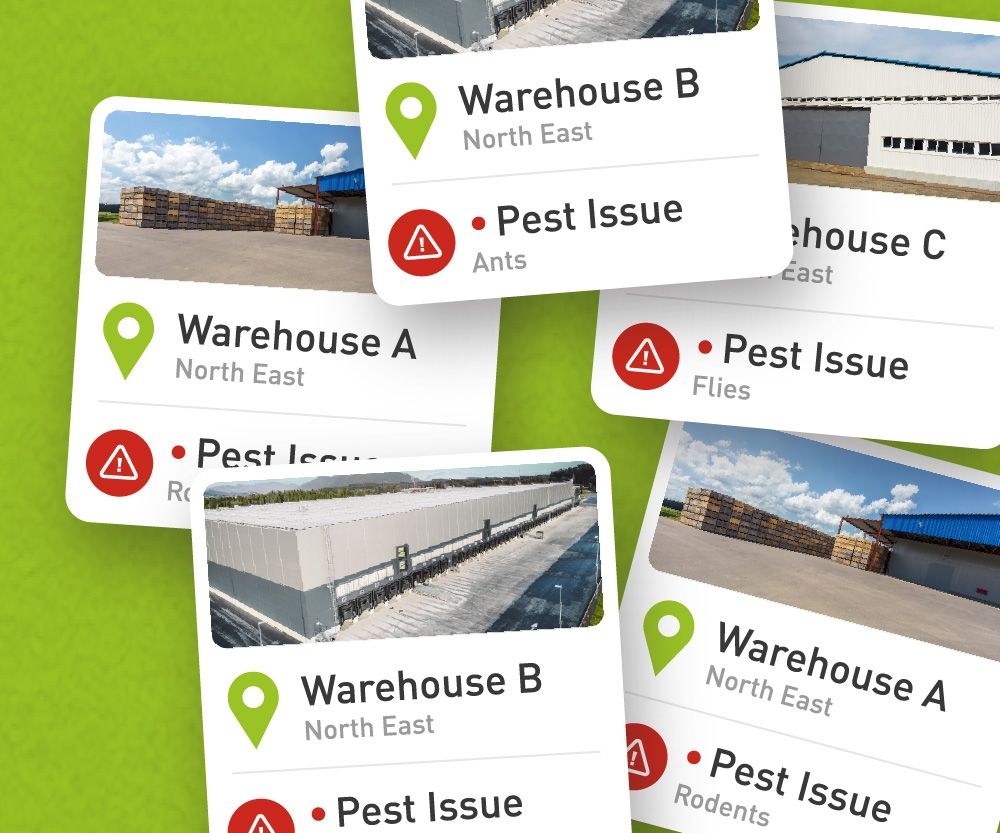
- Tracking issues across multiple locations
Individually, these tasks seem minor. Collectively, they create a significant drain on time and resources. Every hour spent searching for information is an hour not managing operations.
Why Reactive Processes Hurt Operational Performance
Reactive processes force teams to focus on administration rather than action.
Instead of immediately identifying risks and prioritising responses, teams often find themselves navigating email chains, spreadsheets and paper reports to build a picture of what is happening.
This can lead to:
The Impact on Multi-Site Operations
The challenges become even greater across large estates. A single site may be manageable. Ten, twenty or fifty locations quickly introduce complexity.
Without a clear, estate-wide view, organisations can struggle to answer key questions such as:
- Which sites are the highest risk?
- Where are actions overdue?
- Which recommendations keep reappearing?
- Are similar issues occurring across multiple locations?
- Where should resources be prioritised?
The longer it takes to answer these questions, the harder it becomes to operate efficiently.
What Efficient Pest Management Looks Like
Operational efficiency improves when teams spend less time chasing information and more time acting on it.
The most effective pest management programmes provide visibility rather than just reports.
That means being able to see:
- Open and closed actions
- Escalated risks
- Site performance trends
- Action ownership
- Historical activity
- Estate-wide risk hotspots
Instead of searching for updates, teams can access the information they need immediately.
From Job Chasing to Risk Management
Modern digital reporting systems help remove many of the manual processes that slow organisations down.
With real-time visibility, facilities and operations teams can:
- Monitor outstanding actions
- Track progress across sites
- Review trends and recurring issues
- Access service information instantly
- Demonstrate compliance with confidence
This shifts pest management from a reactive process to a proactive operational tool. Rather than asking "Can someone find an update on this issue?"
Teams can focus on "What should we do next?"
Practical Ways to Reduce Administrative Burden
If your team spends significant time chasing updates, consider the following:
Stop Chasing. Start Managing.
In logistics and distribution environments, efficiency depends on visibility.
If teams are spending hours every week tracking reports, following up actions and searching for updates, valuable resources are being diverted away from operational priorities.
The most successful organisations aren't necessarily dealing with fewer issues. They're simply spending less time chasing information and more time acting on insight. Because operational efficiency isn't just about resolving problems quickly.
It's about having the visibility to manage them effectively from the start.
Ready to Reduce the Time Spent Chasing Jobs?
At Contego, we help logistics and distribution businesses gain real-time visibility through digital reporting, action tracking and estate-wide insight. By bringing data, recommendations and corrective actions together in one place, teams can reduce administration, improve accountability and make faster, more informed decisions.
Want to spend less time chasing updates and more time managing operations? Speak to the Contego team to discover how greater visibility can improve efficiency across your sites.