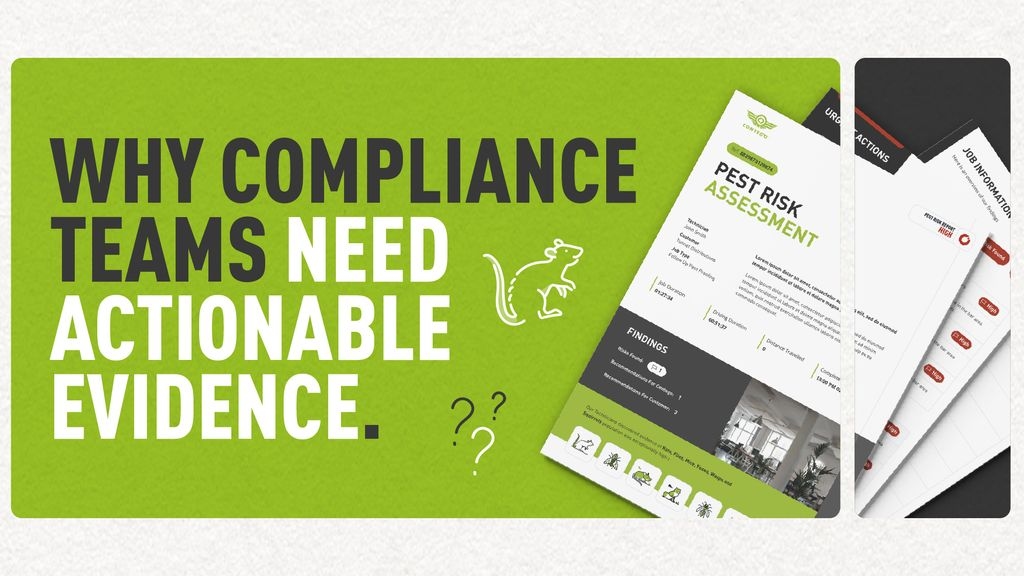
Beyond "No Activity Found": Why Compliance Teams Need Actionable Evidence
For many food manufacturers, a pest control report stating "No Activity Found" appears to be the best possible outcome.
No signs of rodents. No insect activity. No immediate concerns.
Job done, right?
Not necessarily.
While the absence of pest activity is positive, it only provides a snapshot of what was observed during a particular visit. It doesn't tell you whether risks are increasing, whether recommendations have been acted upon, or whether preventative controls are working effectively.
For compliance, QA and food safety teams, that's becoming an increasingly important distinction.
Why "Tick-Box" Reporting Isn't Enough
Historically, many organisations have relied on pest reports primarily as proof that a service visit took place.
However, modern food safety standards demand far more than attendance records.
Schemes such as BRCGS, SALSA and retailer-specific standards increasingly focus on evidence of proactive and preventative pest management, not simply evidence of inspection.
Auditors want to understand:
- How pest risks are assessed
- What preventative measures are in place
- Whether recommendations are acted upon
- How recurring issues are identified and managed
- How trends are monitored over time
A report that simply stated "No activity found" may confirm there were no visible signs of pests on that day, but it provides little evidence of how risk is being managed behind the scenes.
Why You Need to Prove More Than the Absence of Pests
Today's auditors and major buyers want assurance that pest management is supporting wider food safety objectives.
That means being able to demonstrate:
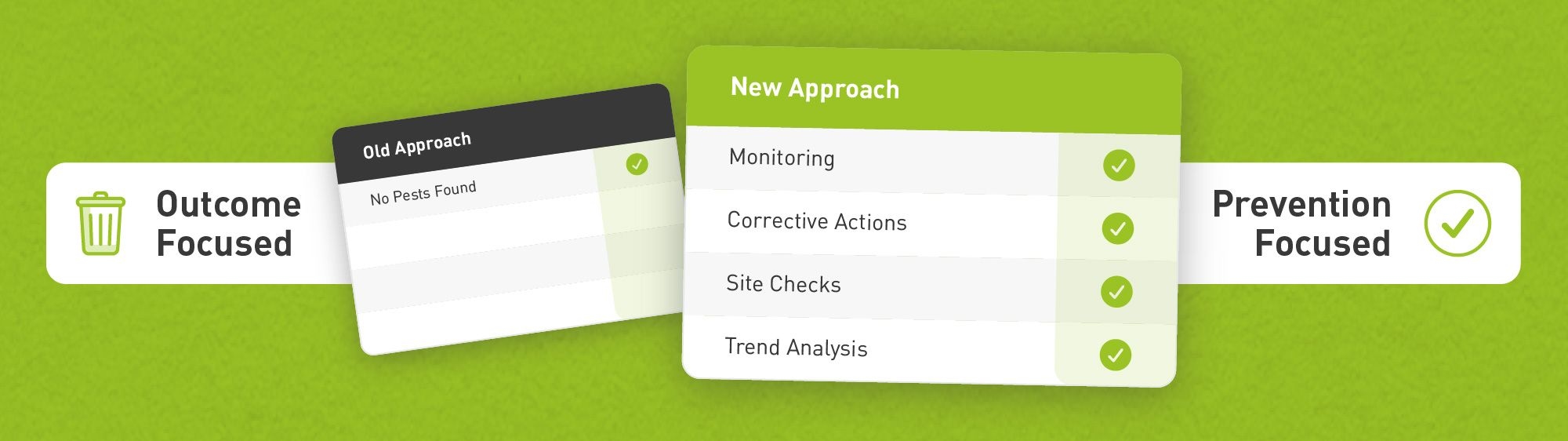
- Ongoing monitoring programmes
- Corrective action management
- Site condition checks
- Trend analysis and review processes
The focus has shifted from proving pests weren't present to proving effective controls were in place.
In other words, the strongest pest management programmes don't just record outcomes. They demonstrate continuous prevention.
What Actionable Evidence Looks Like
Actionable evidence helps organisations understand risk, demonstrate control and make informed decisions.
Rather than simply recording whether activity was found, it provides insight into the effectiveness of the entire pest management programme.
Examples include:
Use Digital Reporting and Dashboards
Digital reporting makes it easier to review performance across sites, monitor outstanding actions and identify recurring risks.
Having information available in one place supports stronger internal reviews and better audit preparation.
Building Confidence Through Better Evidence
The most effective pest management programmes don't rely solely on reports that say "No Activity Found." They provide evidence of monitoring, prevention, corrective action and continuous improvement.
For compliance teams, that's where real assurance comes from. Because when an auditor asks how pest risks are being managed, the answer should be more than an inspection report.
It should be a clear, evidence-based story that demonstrates control.
Are Your Pest Reports Providing Insight or Just Reassurance?
At Contego, we help food manufacturers move beyond basic reporting through digital tools, condition monitoring and data-driven pest management insight.
By combining site observations, corrective action tracking and trend analysis, organisations gain the evidence needed to support audits, strengthen food safety systems and make more informed decisions.
Could You Prove Pest Risk Was Managed Today?
Want to understand what your pest reporting is really telling you?
Speak to the Contego team to discover how actionable evidence can strengthen compliance and support continuous improvement.